
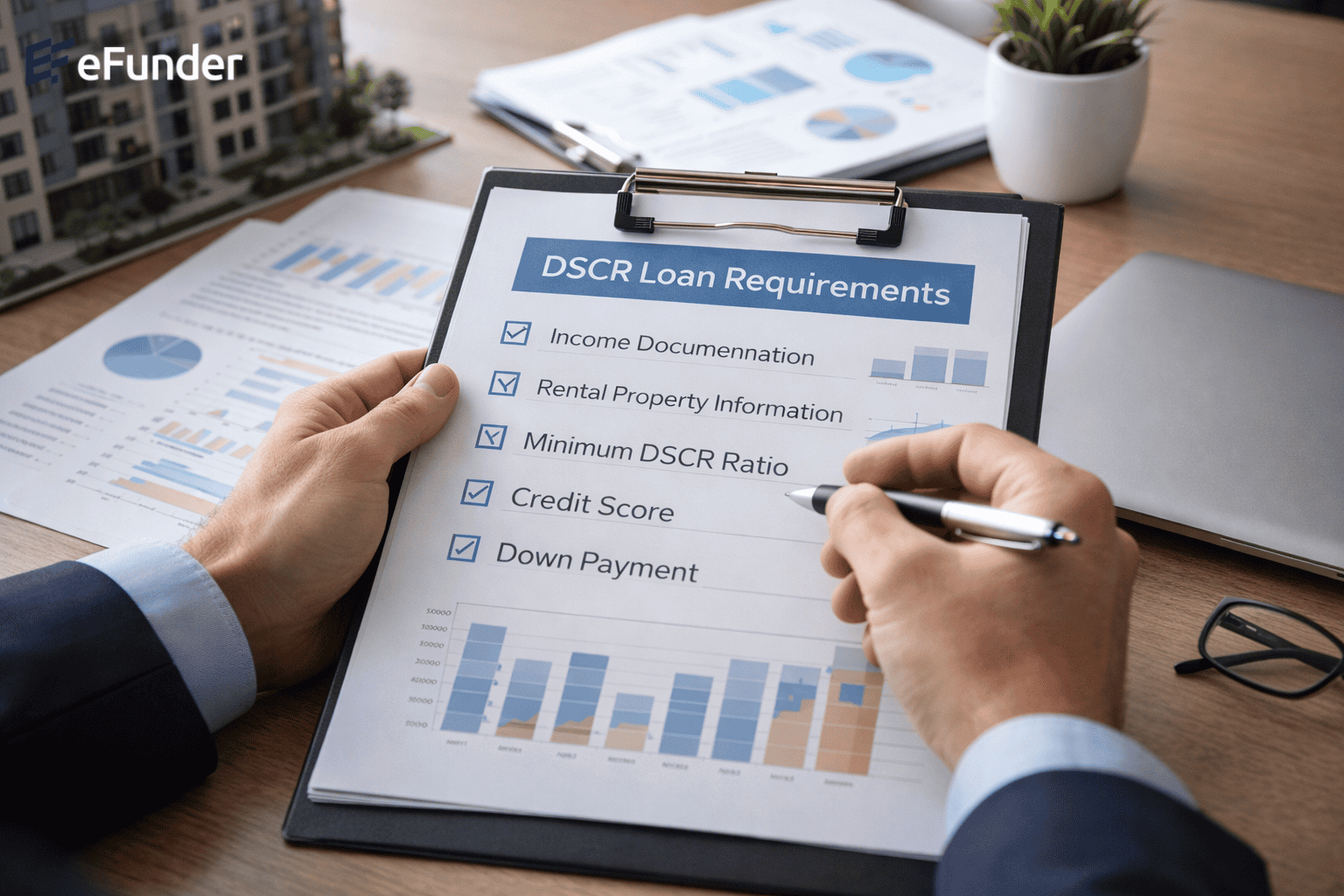

What Lenders Look for in a DSCR Loan
When investors ask about DSCR loan requirements, they often expect a simple checklist.
In practice, these requirements are not applied individually. Most deals are evaluated based on how the property, loan structure, and borrower profile work together.
DSCR loans are built around property performance. The key question is whether the income from the property can support the proposed financing.
This article explains the actual requirements behind DSCR loans and how they are applied in real deal scenarios.
How DSCR Measures Property Income
The foundation of any DSCR loan is the relationship between income and debt.
This is measured using the debt service coverage ratio. The ratio compares the monthly rental income to the total monthly loan payment.
For example:
• Monthly rent: $3,000
• Monthly loan payment: $2,400
This results in a DSCR of 1.25.
A ratio above 1.00 means the property generates more income than the loan requires.
However, lenders do not look at the number alone. They also evaluate how reliable that income is.
A fully leased property with stable tenants is viewed differently than a property with uncertain or projected rents.
Why Rental Income Quality Matters
One of the most important requirements is the quality of the income being used.
Lenders typically review:
• Current lease agreements
• Rent rolls
• Market rent data
If the income is supported by signed leases, the deal is stronger. If the income is based on projections, the deal may need additional support.
For example, a recently renovated property may support higher market rents. However, if those rents are not yet in place, the income may be reduced during evaluation.
This is where deal structure becomes important. Adjusting the loan amount or adding reserves can help offset uncertainty.
How Loan Structure Affects Approval
Loan to value plays a major role in DSCR loan requirements.
Higher leverage increases risk. Lower leverage improves the strength of the deal.
For example:
• 75 percent loan to value with strong income is generally viewed more favorably
• 80 percent or higher loan to value may require a stronger DSCR or borrower profile
Investors sometimes focus only on maximizing leverage. In many cases, reducing the loan amount slightly can make a deal more viable.
This is especially important in borderline DSCR scenarios.
Why Borrower Profile Still Matters
Even though DSCR loans focus on property performance, the borrower is still part of the evaluation.
Common considerations include:
• Credit history
• Real estate experience
• Liquidity or cash reserves
A borrower with prior rental experience may be viewed more favorably than a first-time investor.
Having reserves available can also strengthen a deal, especially if the DSCR is close to minimum levels.
These factors do not replace property performance, but they can influence how the deal is evaluated.
How Property Type and Condition Affect DSCR Loans
Not all properties are evaluated the same way.
Lenders typically prefer:
• Stable residential rental properties
• Properties in active rental markets
• Well-maintained assets
Properties with operational issues may require additional review.
Examples include:
• Properties with deferred maintenance
• Vacant or partially leased properties
• Unique or difficult-to-value property types
Even if the DSCR appears acceptable, property condition can influence the outcome.
Real Example of a DSCR Loan Evaluation
Consider a small multifamily property with the following details:
Purchase price: $600,000
Loan amount: $450,000
Monthly rent: $5,200
Estimated monthly loan payment: $4,100
This results in a DSCR of approximately 1.27.
At first glance, the ratio meets typical expectations. However, the full evaluation includes more than just the number.
If the property is fully leased with stable tenants, the income is considered reliable.
If the borrower has experience managing rental property, this strengthens the overall profile.
Now consider a different version of the same deal.
The property is partially vacant, and the $5,200 rent reflects projected income after stabilization.
In this situation, the DSCR may be based on current income instead of projected income.
This could lower the ratio and change how the deal is structured.
Possible adjustments may include:
• Reducing the loan amount
• Waiting until the property is stabilized
• Providing additional reserves
This example shows that DSCR loan requirements depend on real conditions, not just calculations.
Common DSCR Loan Mistakes Investors Make
Many issues come from misunderstanding how these loans are evaluated.
One common mistake is treating DSCR as a pass or fail number.
In reality, the ratio is only one part of the overall picture.
Another issue is relying too heavily on projected rents. Without supporting data, these numbers may not be fully accepted.
Some investors also overlook leverage. Pushing for the highest possible loan amount can weaken an otherwise strong deal.
Property condition is another factor that is often underestimated. Strong income alone may not offset major property issues.
Incomplete documentation can also slow down the process. Clear leases, rent rolls, and property details help present a stronger deal.
Key Takeaways for Investors and Brokers
DSCR loan requirements should be viewed as a combination of income, structure, and risk.
The strongest deals are not always the ones with the highest leverage or the most aggressive projections.
They are the deals where:
• Income is stable and well documented
• Loan structure is balanced
• Property condition supports long-term performance
Investors who approach DSCR loans this way tend to structure more workable transactions.
eFunder Capital works with investors and brokers to review these scenarios and help align deals with financing expectations based on real-world conditions.
If you have a deal you would like reviewed, submit it here:
https://efundercapital.com/deal-intake


