

By Terence Young
Founder, eFunder Capital
https://eFunderCapital.com/dac
Sometimes, getting denied isn’t about your business — it’s about the details.
In my years of working with business owners and brokers, I’ve seen hundreds of funding applications get slowed down — or stopped altogether — for reasons that could’ve been fixed in five minutes.
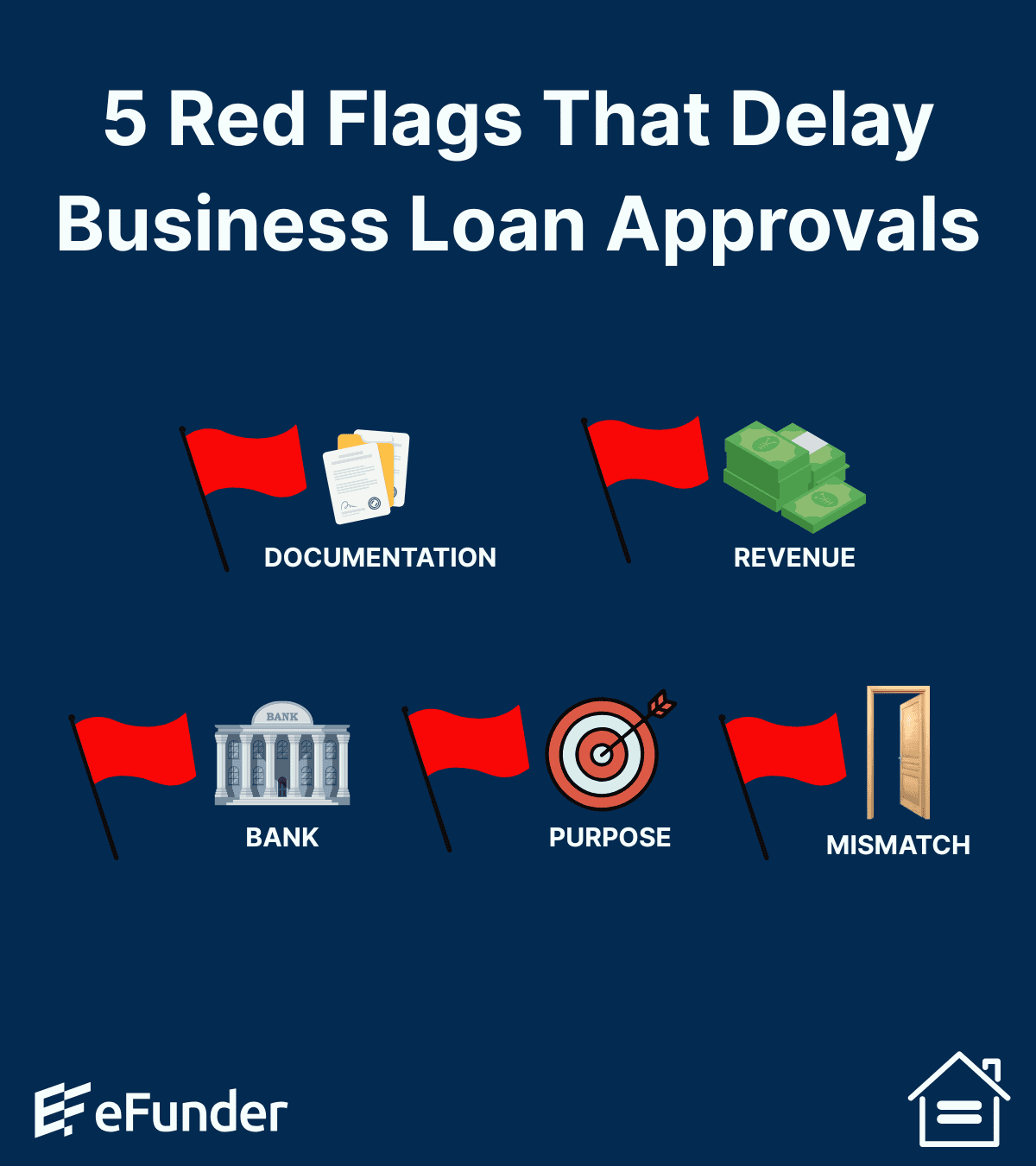
If you’ve ever wondered why approvals take longer than expected, these are the five biggest red flags lenders look for — and what to do about them before you hit “apply.”
1. Missing or Inconsistent Documentation
This is the number one delay I see.
When lenders can’t verify your business income, deposits, or ownership structure, the application stops cold.
Fix: Before applying, make sure you have:
- The last 3–6 months of business bank statements
- A voided business check
- A copy of your ID
- Proof that your business is active and in good standing
Simple prep upfront saves days of back-and-forth later.

2. Unclear Use of Funds
Lenders don’t just want to know if you need money — they want to know why.
“Working capital” is fine, but “$40K to buy new equipment and expand production” builds confidence and clarity.
Fix: Write down your top 1–2 funding objectives before applying.
When your purpose is clear, your application reads stronger — and underwriters move faster.
3. Low or Unstable Monthly Revenue
Most business funding programs (especially short-term working capital loans) require consistent monthly deposits.
If your income fluctuates heavily, you might be matched with higher-risk programs — or none at all.
Fix: Show consistent revenue if possible.
If your deposits vary, add context in your application (e.g., “Seasonal business — slower in January, doubles in Q2”).
Transparency always helps.

4. Inconsistent Bank Activity
Frequent overdrafts, negative days, or excessive transfers between personal and business accounts are all red flags.
Even strong businesses can get flagged by messy account activity.
Fix: Keep your business transactions in your business account — and limit personal use.
If you’ve had overdrafts in the past, demonstrate improved balances over the last 30–60 days before applying.

5. Applying Through the Wrong Channel
Not all lenders fit every business model.
For example:
- Some funders avoid startups (under 6 months old).
- Others require specific industries or minimum monthly deposits.
If you apply directly to the wrong lender, you’ll waste time — and sometimes hurt your future approval odds.
Fix: Use a funding network that matches you with multiple programs in one step.
That’s exactly what the DAC platform through eFunder Capital does — it finds the right fit automatically.
👉 Apply or learn more at eFunderCapital.com/dac.
Bottom Line
Most business owners don’t get denied because they’re unqualified — they get denied because their file wasn’t complete or matched to the wrong lender.
By tightening up your documents, clarifying your goals, and applying through a multi-lender network like DAC, you put yourself in the best position to get a fast, clean approval.
If you’re ready to see what you qualify for, start here:
👉 eFunderCapital.com/dac
Disclaimer: Not a commitment to lend. Terms and conditions apply. Credit and collateral are subject to approval. Programs and rates are subject to change without notice.


