
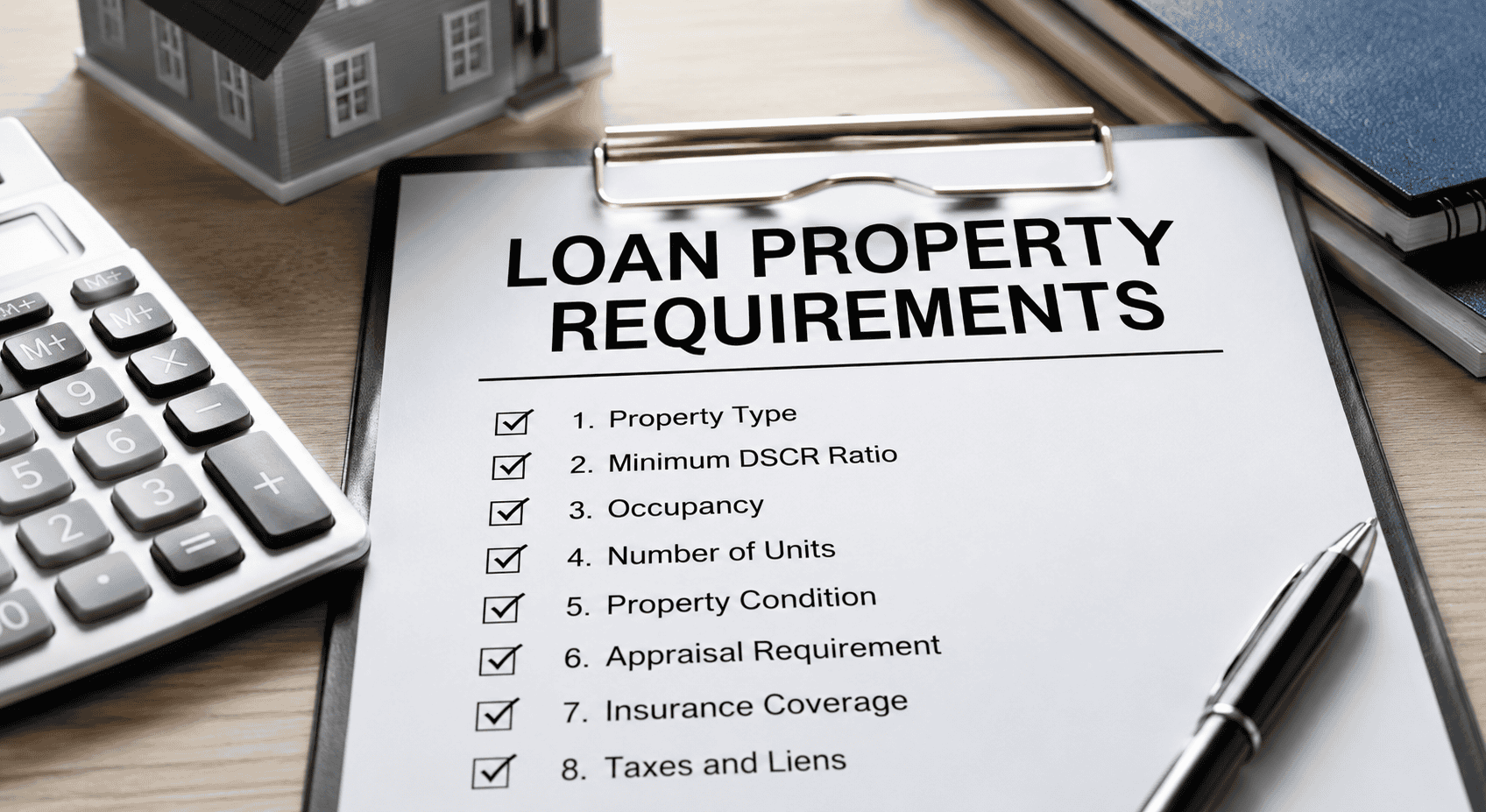

Many investors focus heavily on credit score and down payment requirements when applying for DSCR financing. In practice, the property itself often becomes one of the most important parts of the approval process.
Understanding property requirements can help investors avoid delays, identify potential issues earlier, and improve overall deal execution.
How Property Condition Impacts DSCR Loan Eligibility
One of the most common issues in DSCR financing involves property condition.
DSCR loans are generally designed for income-producing investment properties that are considered stable and rentable. If a property has significant deferred maintenance, incomplete renovations, safety issues, or vacancy caused by condition problems, financing options may become more limited.
For example, a stabilized rental duplex with functioning systems, updated interiors, and active tenants is typically viewed differently than a vacant property with unfinished repairs and no rental history.
This becomes especially important for investors acquiring distressed properties. Many investors assume they can use long-term DSCR financing immediately after acquisition, even when the property still requires major rehabilitation.
This creates an important distinction between properties that are considered “rent ready” and properties that are still in transition.
Common Property Issues That May Affect DSCR Financing
Several property-related issues frequently create complications during underwriting:
- Significant deferred maintenance
- Incomplete renovations
- Structural concerns
- Non-functioning kitchens or bathrooms
- Safety hazards
- Unpermitted additions
- Major vacancy caused by condition problems
- Environmental concerns
- Title or zoning inconsistencies
Some issues may simply require additional documentation. Others may limit financing options entirely until corrected.
Experienced investors often evaluate these factors before submitting a deal to avoid unnecessary delays.
Why Property Type Matters in DSCR Lending
Property type also plays a major role in DSCR loan structuring.
Single-family rentals and standard multifamily properties are generally the most straightforward scenarios. As property complexity increases, underwriting requirements often become more detailed.
For example, mixed-use properties may require analysis of both residential and commercial income streams. Small multifamily properties may require additional rent roll review and operating expense analysis.
Certain property types may also have limited financing availability depending on market conditions and investor demand.
Examples of Property Types Commonly Evaluated
Common DSCR property scenarios include:
- Single-family rental properties
- Duplexes and triplexes
- Four-unit residential properties
- Small multifamily buildings
- Condominiums
- Townhomes
- Mixed-use investment properties
Properties with unusual layouts, operational complexity, or specialized uses may require additional review.
For investors expanding into more complex asset classes, understanding these differences becomes important for financing strategy.
Occupancy and Rental Income Stability
Property occupancy is another major factor in DSCR underwriting.
Because DSCR loans rely heavily on property cash flow, stable rental income directly affects how the financing is evaluated.
A fully leased property with consistent rent collections is generally easier to finance than a vacant property with uncertain income projections.
This does not mean vacant properties cannot qualify. However, the financing structure may change depending on the scenario.
For example, an investor purchasing a vacant property with plans to renovate and stabilize it may initially require bridge financing before refinancing into a long-term DSCR loan after lease stabilization.
Example Scenario
An investor purchases a four-unit property for $650,000.
At acquisition:
- Two units are vacant
- Two units require renovation
- Existing rents are below market
- The property has deferred maintenance
Although the investor plans to increase rents after improvements, the current property condition and occupancy may create challenges for immediate DSCR financing.
This type of financing sequence is common among investors repositioning underperforming assets.
Common Mistakes Investors Make With Property Requirements
One common mistake is assuming all investment properties qualify equally under DSCR financing.
In reality, underwriting often depends on how stable, functional, and income-producing the property appears at the time of review.
Another mistake is underestimating how deferred maintenance affects financing timelines. Investors sometimes focus only on projected future value while lenders evaluate current property condition.
Some investors also overlook zoning and property use issues. A property operating outside permitted zoning classifications may create financing complications even if rental income appears strong.
Documentation gaps can also create problems.
Examples include:
- Missing leases
- Incomplete rent rolls
- Unclear ownership records
- Inconsistent property insurance
- Unpermitted renovations
Experienced investors and brokers typically identify these issues before formal underwriting begins.
Internal Linking Opportunities
Related topics that naturally connect with this article include:
- DSCR Loans for Real Estate Investors
- DSCR Loan Requirements Explained
- Fix and Flip Loans
- Bridge Loans for Investors
- Mixed-Use Property Financing
- Commercial Property Loans Under $5 Million
These topics help investors understand how property condition and asset type influence financing strategy across different loan structures.
Conclusion
DSCR loan property requirements extend far beyond basic borrower qualifications.
Property condition, occupancy stability, rental income consistency, and asset type all influence how financing is structured and evaluated.
Investors who understand these property-level considerations can often identify financing issues earlier, structure acquisitions more effectively, and move projects through underwriting more efficiently.
For many real estate investors, successful financing begins with understanding how the property itself will be viewed during the review process.
If you have a deal you would like reviewed, submit it here: