
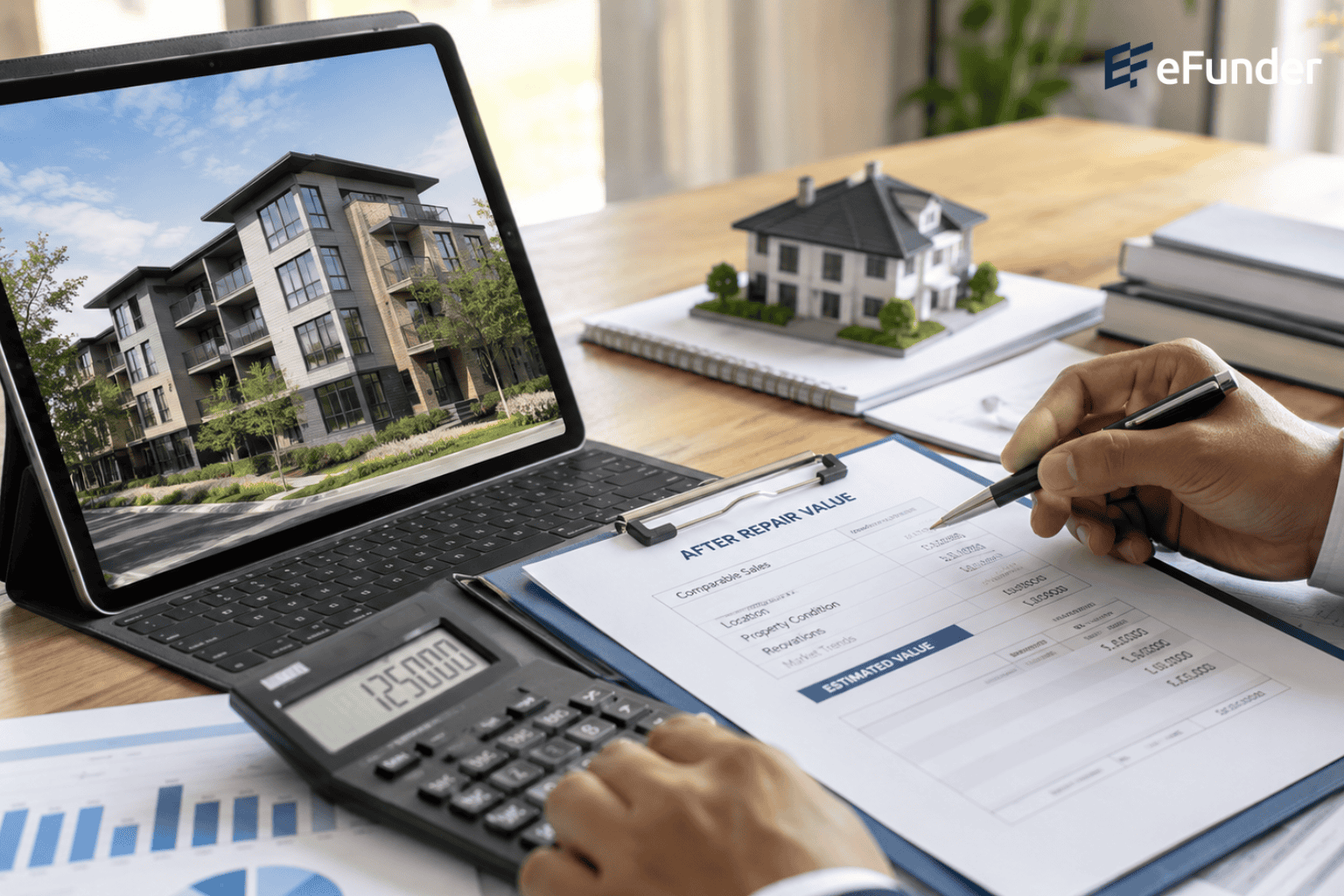

After Repair Value, commonly called ARV, is one of the most important figures in real estate investing. Whether an investor is renovating a single-family home or completing multiple fix and flip projects, ARV helps determine a property’s potential value after renovations are complete.
Lenders also rely on ARV when reviewing many short-term real estate financing requests. Rather than looking only at a property’s current condition, they evaluate what the property may be worth after planned improvements are completed. This helps them assess the overall investment opportunity and determine financing terms based on the projected value.
Understanding how lenders calculate ARV can help investors estimate project feasibility, prepare more accurate budgets, and avoid unrealistic expectations before purchasing a property.
What Is After Repair Value (ARV)?
After Repair Value is the estimated market value of a property after all planned renovations and improvements have been completed.
Unlike the current market value, ARV reflects what the property could reasonably sell for once it has been repaired and brought to a condition that is consistent with similar homes in the surrounding market.
ARV is commonly used in fix and flip investing because many properties are purchased below market value due to deferred maintenance or outdated features. Renovations are intended to increase the property’s value, making ARV an important figure when evaluating potential returns.
Although investors often calculate their own ARV before making an offer, lenders also perform an independent evaluation as part of their financing review. Their estimate may differ depending on the renovation plans, comparable sales, and market conditions.
Why After Repair Value Matters to Lenders
ARV helps lenders evaluate the level of risk associated with a renovation project. Instead of focusing only on the property’s current value, they consider whether the completed project is likely to support the requested financing.
A realistic ARV allows lenders to determine whether the proposed improvements are likely to create enough value relative to the total investment.
ARV is also used when establishing financing limits. Many fix and flip financing programs consider both the purchase price and the projected value after repairs when determining the maximum loan amount. While every financing program has different guidelines, the estimated ARV often plays an important role in that calculation.
For investors, understanding this process makes it easier to structure offers, estimate renovation budgets, and identify projects that align with their investment goals.
How Lenders Calculate After Repair Value
Review the Property’s Current Condition
The evaluation begins with the property’s existing condition.
Lenders review factors such as the property’s size, layout, age, location, structural condition, and any obvious repairs that need to be completed. Properties requiring cosmetic improvements are evaluated differently from those needing extensive structural work.
This initial review establishes a starting point before considering any planned renovations.
Estimate the Scope of Renovations
Next, lenders examine the investor’s renovation plan.
They typically review the proposed improvements, estimated repair costs, contractor bids if available, and the overall scope of work.
Projects that include kitchen and bathroom renovations, flooring, roofing, updated mechanical systems, and exterior improvements may contribute more value than projects focused primarily on cosmetic upgrades.
The lender also considers whether the renovation budget appears realistic for the work being proposed.
Analyze Comparable Sales
Comparable sales, often called “comps,” are one of the most important components of the ARV calculation.
An appraiser typically reviews recently sold properties that are similar in size, location, age, design, and condition after renovation. These comparable properties help estimate what the subject property could reasonably sell for once improvements are complete.
Adjustments may be made to account for differences such as lot size, square footage, number of bedrooms, number of bathrooms, garages, or additional features.
Using accurate comparable sales helps create a realistic estimate rather than relying on optimistic assumptions.
Determine the Estimated After Repair Value
After reviewing the property, renovation plans, and comparable sales, the lender develops an estimated ARV.
This figure represents the property’s projected market value after all planned improvements have been completed.
Because ARV is an estimate rather than a guarantee, different appraisers or lenders may arrive at slightly different conclusions based on the comparable sales and adjustments they consider most appropriate.
Apply Loan to Value Guidelines
Once the ARV has been established, lenders use it as one factor when determining financing limits.
Many financing programs calculate the maximum loan amount by applying a loan-to-value ratio to the projected ARV while also considering other factors such as the purchase price, renovation budget, borrower experience, and overall project risk.
As a result, a higher ARV does not automatically result in a larger loan. The financing structure depends on the complete project and the lender’s underwriting guidelines.
Example of an After Repair Value Calculation
Consider an investor purchasing a property for $250,000.
The investor estimates that renovations will cost $75,000 and plans to update the kitchen, bathrooms, flooring, roof, landscaping, and mechanical systems.
During the appraisal process, comparable renovated homes in the same neighborhood have recently sold for approximately $425,000.
Based on these comparable sales and the planned improvements, the property’s estimated ARV is determined to be $425,000.
This process helps both the lender and the investor evaluate whether the project appears financially reasonable before renovations begin.
Common Mistakes Investors Make When Estimating ARV
One of the most common mistakes is relying on listing prices instead of completed sales. Active listings reflect asking prices, not the prices buyers were actually willing to pay.
Another mistake is selecting comparable properties from different neighborhoods or significantly different property types. Even small location differences can have a meaningful impact on value.
Some investors also overestimate the value that renovations will add. While upgrades often increase property value, not every dollar spent on improvements results in an equal increase in market value.
Ignoring current market conditions is another frequent error. Changes in local inventory, buyer demand, and interest rates can influence property values during the renovation period.
Finally, some investors underestimate renovation costs or project timelines. Budget overruns and delays can affect the overall profitability of a project, even if the ARV estimate is accurate.
Final Thoughts
After Repair Value is one of the key measurements used to evaluate fix and flip opportunities. By analyzing the property’s condition, reviewing renovation plans, and comparing recent sales of similar renovated properties, lenders develop an estimate of what the property may be worth after improvements are complete.
Understanding how this process works allows investors to evaluate opportunities more realistically, create stronger renovation plans, and make better-informed financing decisions.
As a real estate financing platform, eFunder Capital helps investors structure financing solutions for projects that involve property acquisition, renovation, and long-term investment strategies.
If you have a deal you would like reviewed, submit it here: https://efundercapital.com/deal-intake